> ## Documentation Index
> Fetch the complete documentation index at: https://docs.promptlayer.com/llms.txt
> Use this file to discover all available pages before exploring further.
# Introduction
> Use webhooks to receive notifications about prompt, dataset, evaluation, workflow, and skill collection events in your workspace.
PromptLayer webhooks let your systems react to workspace changes so you can keep prompt caches fresh, trigger CI/CD or GitOps workflows, sync external systems, and monitor asynchronous jobs without polling.
For event names and payload details, see [Events](/features/prompt-registry/webhook-events).
### Configuring a Webhook
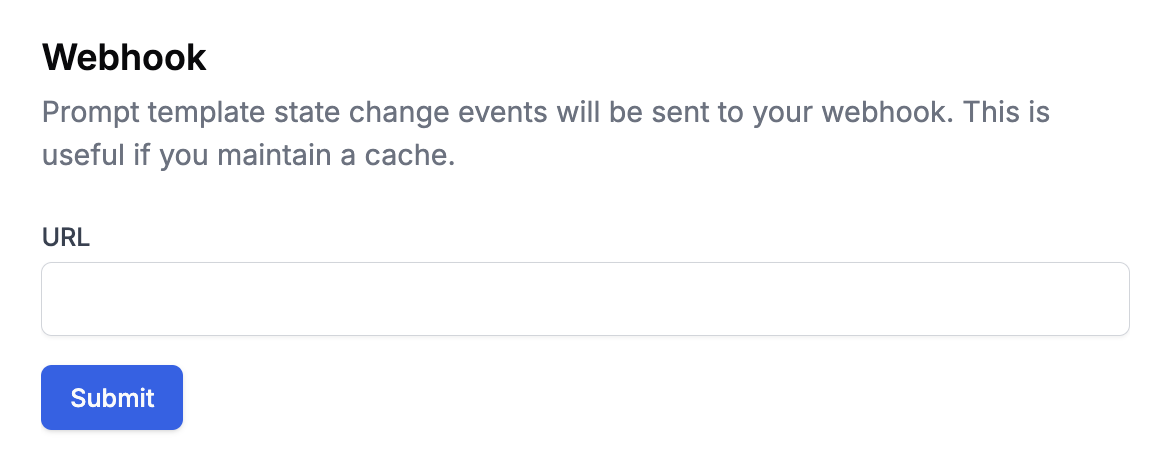
To set up a webhook, go to the **Webhook** section in the **Settings** page. Enter the URL of the endpoint you want to send the webhook to and click **Submit**.
 ### Securing Your Webhook
When you create a webhook, you'll receive a webhook secret signature that looks like this:
### Securing Your Webhook
When you create a webhook, you'll receive a webhook secret signature that looks like this:
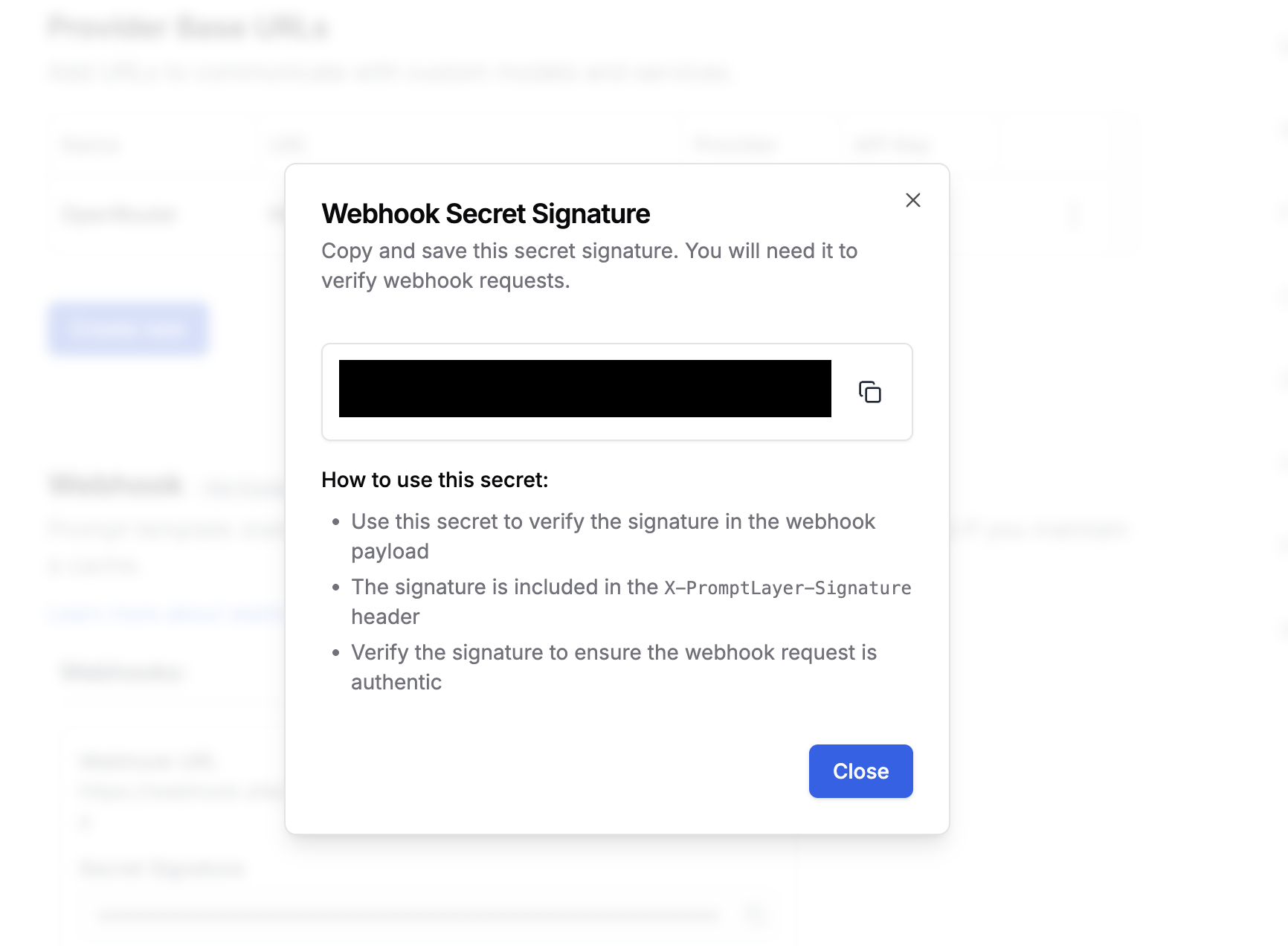 This secret is used to verify that incoming webhook requests are authentic and come from PromptLayer. The signature is included in the `X-PromptLayer-Signature` header of each webhook request.
#### Verifying Webhook Signatures
Here are code examples showing how to verify the signatures:
```python Python theme={null}
import hmac
import hashlib
import json
signature = "HEADER FROM X-PromptLayer-Signature" # Replace with actual header value
secret_key = "SECRET KEY FROM PROMPTLAYER DASHBOARD" # Replace with actual secret key
payload = {} # Replace with actual payload
payload_str = json.dumps(payload, sort_keys=True)
expected_signature = hmac.new(
key=secret_key.encode(),
msg=payload_str.encode('utf-8'),
digestmod=hashlib.sha256
).hexdigest()
if hmac.compare_digest(expected_signature, signature):
print("Signature is valid")
else:
print("Signature is invalid")
```
```javascript JavaScript theme={null}
import crypto from "crypto";
import stringify from "json-stable-stringify";
// Replace these with actual values
const signature = "HEADER FROM X-PromptLayer-Signature"; // From request header
const secretKey = "SECRET KEY FROM PROMPTLAYER DASHBOARD"; // Your webhook secret
const payload = {}; // Replace with actual request body
export function formatPayload(payload) {
const raw = stringify(payload);
const spacedColons = raw.replace(/"([^"]+)"\s*:/g, '"$1": ');
const spaced = spacedColons.replace(/,(?=(?:\s*[\{"\[]))/g, ", ");
return spaced;
}
export function generateSignature(payload, secretKey) {
const normalized = formatPayload(payload);
return crypto
.createHmac("sha256", secretKey)
.update(normalized)
.digest("hex");
}
export function verifySignature(signature, payload, secretKey) {
const expected = generateSignature(payload, secretKey);
try {
return crypto.timingSafeEqual(
Buffer.from(signature, "hex"),
Buffer.from(expected, "hex")
);
} catch {
return false;
}
}
const isValid = verifySignature(signature, payload, secretKey);
console.log("Signature is", isValid ? "valid" : "invalid");
```
This secret is used to verify that incoming webhook requests are authentic and come from PromptLayer. The signature is included in the `X-PromptLayer-Signature` header of each webhook request.
#### Verifying Webhook Signatures
Here are code examples showing how to verify the signatures:
```python Python theme={null}
import hmac
import hashlib
import json
signature = "HEADER FROM X-PromptLayer-Signature" # Replace with actual header value
secret_key = "SECRET KEY FROM PROMPTLAYER DASHBOARD" # Replace with actual secret key
payload = {} # Replace with actual payload
payload_str = json.dumps(payload, sort_keys=True)
expected_signature = hmac.new(
key=secret_key.encode(),
msg=payload_str.encode('utf-8'),
digestmod=hashlib.sha256
).hexdigest()
if hmac.compare_digest(expected_signature, signature):
print("Signature is valid")
else:
print("Signature is invalid")
```
```javascript JavaScript theme={null}
import crypto from "crypto";
import stringify from "json-stable-stringify";
// Replace these with actual values
const signature = "HEADER FROM X-PromptLayer-Signature"; // From request header
const secretKey = "SECRET KEY FROM PROMPTLAYER DASHBOARD"; // Your webhook secret
const payload = {}; // Replace with actual request body
export function formatPayload(payload) {
const raw = stringify(payload);
const spacedColons = raw.replace(/"([^"]+)"\s*:/g, '"$1": ');
const spaced = spacedColons.replace(/,(?=(?:\s*[\{"\[]))/g, ", ");
return spaced;
}
export function generateSignature(payload, secretKey) {
const normalized = formatPayload(payload);
return crypto
.createHmac("sha256", secretKey)
.update(normalized)
.digest("hex");
}
export function verifySignature(signature, payload, secretKey) {
const expected = generateSignature(payload, secretKey);
try {
return crypto.timingSafeEqual(
Buffer.from(signature, "hex"),
Buffer.from(expected, "hex")
);
} catch {
return false;
}
}
const isValid = verifySignature(signature, payload, secretKey);
console.log("Signature is", isValid ? "valid" : "invalid");
```